
Seasickness on cruise ships remains one of the most common concerns for both first-time voyagers and experienced travellers alike. The good news is that modern cruise ships are designed for stability, and most guests never feel more than a gentle sway. With the right preparation and a few simple tips, you can focus on enjoying your holiday instead of worrying about feeling seasick on a cruise.
Let’s go through what causes seasickness on cruises as well as the best tips and tricks help you avoid and combat it.
Guru Tip: Before taking any medication, be sure to consult a medical professional to ensure it is safe for you to take based on your medical history.
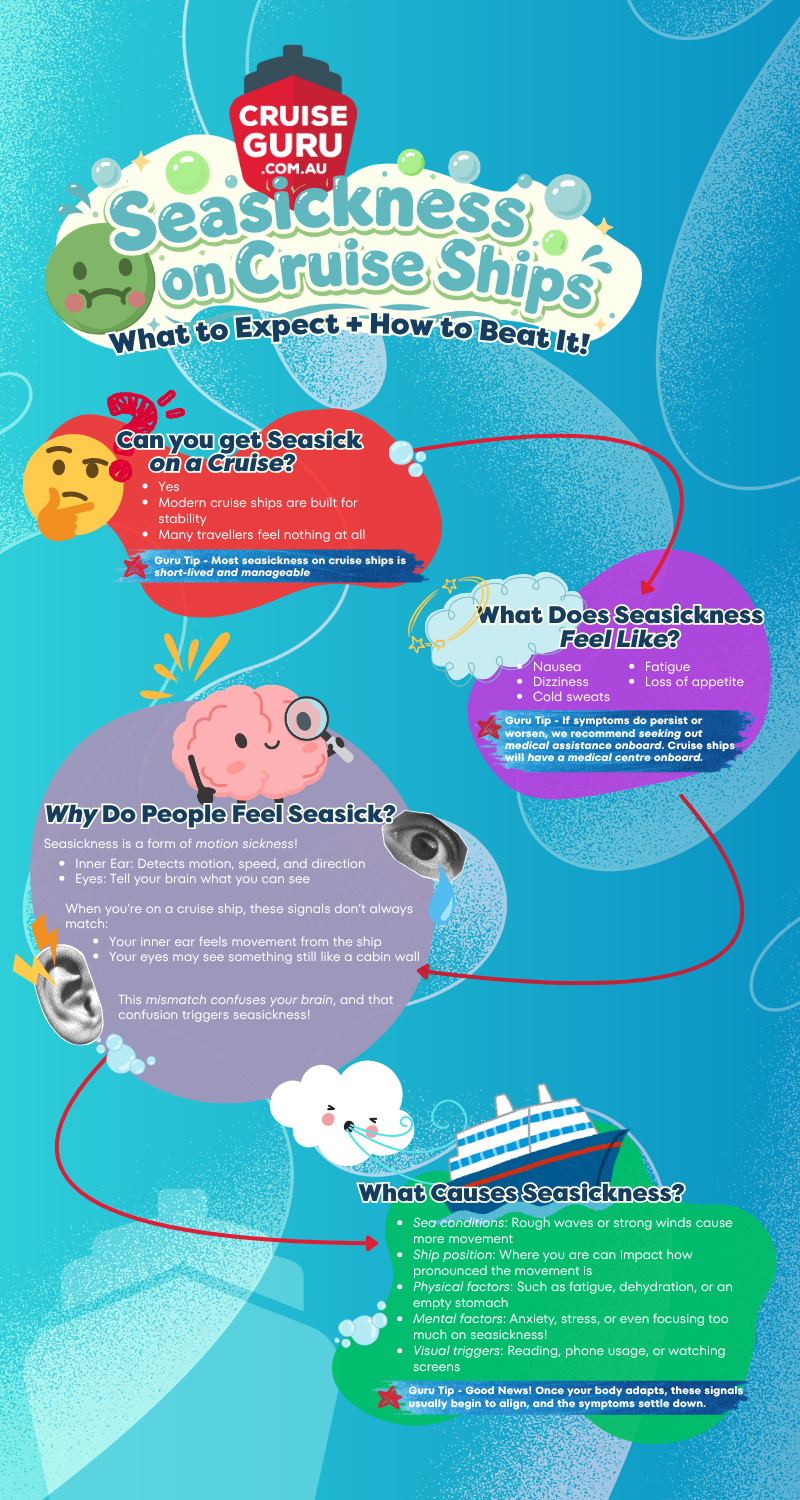
Can You Get Seasick on a Cruise?
Yes, you can get seasick on a cruise. This applies across the board, whether you are sailing on a large ocean cruise ship, a smaller expedition vessel, a luxury yacht, a river cruise or even a short one-day sailing.
The type of cruise you choose can influence how likely you are to feel seasick on a cruise. Large ocean ships tend to offer the most stability due to their size and weight. River cruises are typically very calm as they sail through sheltered waterways rather than open seas. On the other hand, smaller ships and expedition cruises may experience more noticeable movement, particularly in remote regions or unpredictable conditions.
Weather plays a big role too. Calm seas can make it feel like you are barely moving, while rougher conditions can increase the chance of feeling unwell. It is also worth noting that everyone reacts differently. Some travellers never experience any symptoms at all, while others may feel slightly off balance, particularly during the first day or two as their body adjusts.
Guru Tip: The key takeaway is that while it is possible to get seasick on a cruise, most cases are mild, short-lived and very manageable with the right preparation.
What Causes Seasickness?
Seasickness is a form of motion sickness, and it all comes down to how your body processes movement. Your balance is controlled by your inner ear, which detects motion, speed and changes in direction. At the same time, your eyes send visual signals to your brain about what they are seeing. When you are on a cruise ship, these two systems do not always agree.
For example, if you are inside your cabin looking at a stationary wall, your eyes tell your brain that you are not moving. However, your inner ear is detecting the motion of the ship as it moves through the water. This mismatch creates confusion in the brain, which can trigger the symptoms commonly associated with seasickness.
For some people, seasickness may feel like a mild discomfort, while for others it can be more noticeable, especially if they are prone to motion sickness.
There are also several factors that can increase your chances of experiencing seasickness on cruise ships:
- Sea conditions such as rough waves, swell or strong winds that create more noticeable movement
- Your position on the ship including cabins at the front, back or higher decks where motion is more pronounced
- Physical factors like fatigue, dehydration or an empty stomach
- Mental factors such as anxiety, anticipation or focusing too much on the possibility of getting seasick
- Visual triggers like reading, scrolling on your phone or watching screens while the ship is moving
Guru Tip: It’s important to remember that seasickness is your body responding to unfamiliar motion. The good news is that once your body adapts, these signals usually begin to align, and the symptoms settle down.

What Happens If You Get Seasick on a Cruise?
Even with the best preparation, it is still possible to feel seasick on a cruise. The good news is that in most cases, symptoms are mild, short-lived and easy to manage.
Common symptoms of seasickness on cruise ships include:
- Nausea
- Dizziness or light-headedness
- Cold sweats
- Loss of appetite
- General discomfort or fatigue
For most travellers, these symptoms tend to appear during periods of increased movement, such as rough seas or the first day or two of sailing. As your body begins to adjust, they often fade quickly.
How to Avoid or Prevent Seasickness on a Cruise
When it comes to seasickness on cruise ships, preparation really does make all the difference. The best way to prevent seasickness on a cruise is to act before symptoms begin, rather than trying to manage them once you already feel unwell.
Here are some of the most effective ways to avoid seasickness on a cruise:
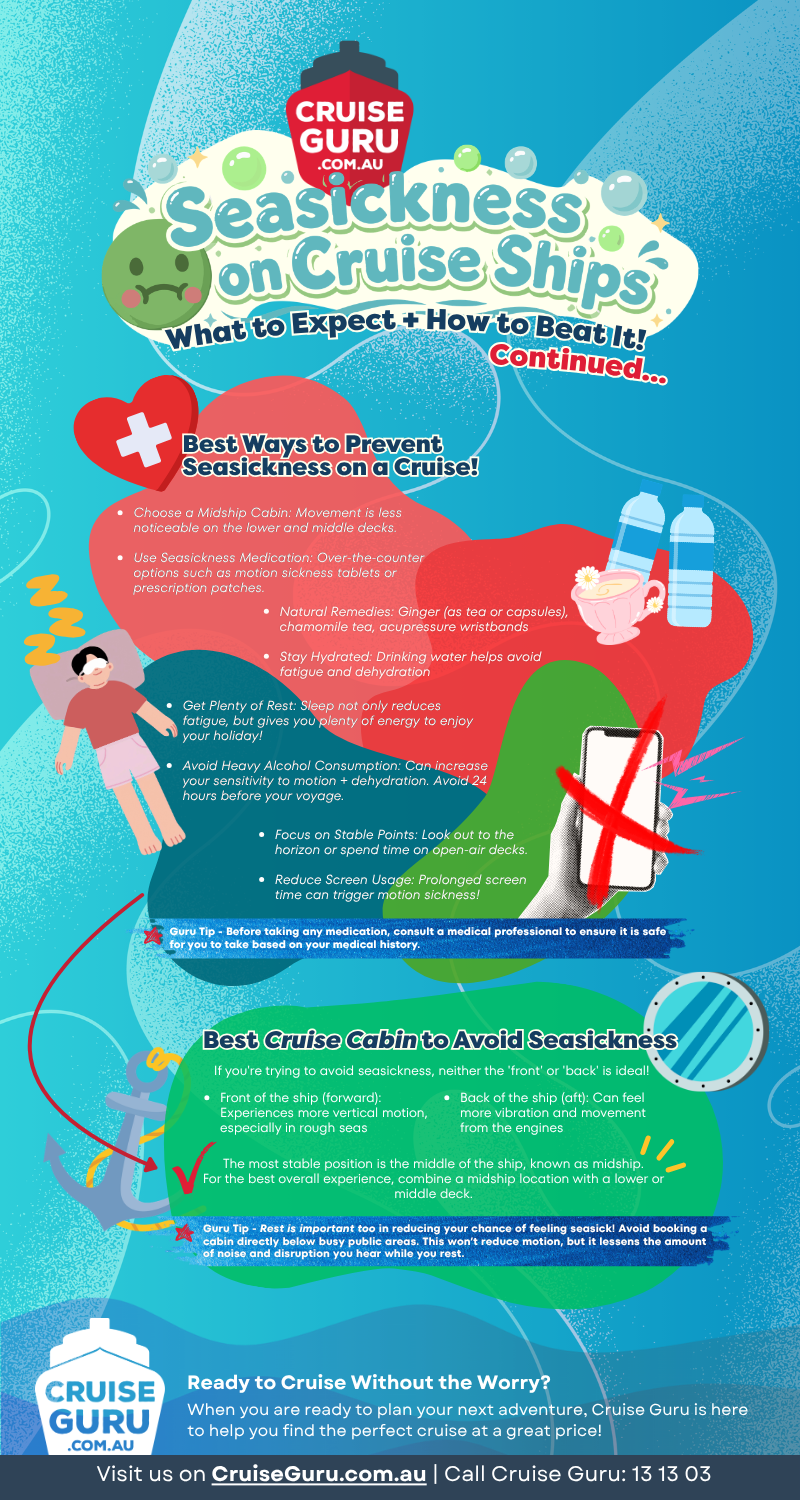
Choose the right cabin location
Opt for a midship cabin on a lower or middle deck, where movement is less noticeable. This is widely considered the best cruise cabin for seasickness and can significantly reduce motion. We dive deeper into this topic later in this guide.
Use seasickness medication
Over-the-counter options like motion sickness tablets or prescription patches can be very effective. These are best taken before departure or at the first sign of movement. Even if you aren’t the type to get seasick or motion sick, it’s always good to keep them on hand just in case.
Try natural remedies
Ginger is one of the most popular natural options and can be consumed as tea, capsules or snacks. Chamomile tea is also another natural option which can help alleviate symptoms. Acupressure wristbands are another simple, drug-free way to help prevent seasickness on a cruise.
Stay hydrated and well rested
Dehydration and fatigue can make symptoms worse. Drinking plenty of water and getting a good night’s sleep before and during your cruise can help your body adjust more easily.
Avoid heavy alcohol consumption before sailing
Alcohol can increase dehydration and sensitivity to motion. We recommend avoiding alcohol 24 hours before your voyage.
Ease into your cruise
On the first day, keep your schedule light on activities. Spend time exploring the ship, get some fresh air and avoid overloading your time. This gives your body time to adjust naturally.
Focus on stable points
Looking out at the horizon or spending time on open decks can help your brain process movement more accurately, reducing the chance of feeling seasick on a cruise.
Taking these steps early is the best way to prevent seasickness on a cruise and set yourself up for a smooth and enjoyable holiday from day one.
Guru Tip: Before taking any medication, be sure to consult a medical professional to ensure it is safe for you to take based on your medical history.
How Long Does Seasickness Last on a Cruise?
For most people, seasickness is temporary. It often lasts a few hours to a couple of days, usually at the beginning of the cruise while your body adjusts to the motion.
This adjustment process is known as acclimatisation. Once your body adapts, symptoms tend to disappear. If rough seas occur later in the journey, symptoms may return briefly but are usually less intense.
Guru Tip: If symptoms do persist or worsen, we recommend seeking out medical assistance onboard. Cruise ships will have a medical centre onboard with staff trained for situations just like this.
Where Are the Best Cruise Cabins to Avoid Seasickness?
Choosing the best cruise cabin for seasickness can have a noticeable impact on how comfortable you feel throughout your trip. While modern ships are designed to minimise motion, where you stay still plays an important role in how much movement you experience.
In general, the most stable cabins are located:
- Midship
- Lower or middle decks
These areas sit closest to the ship’s centre of gravity, which means they experience less sway and rolling compared to other parts of the ship. Movement is still present, but it tends to feel more subtle and easier for your body to adjust to.
If you are specifically looking for the best cruise rooms for seasickness, it is also worth considering the type of cabin you book:
- Balcony cabins allow access to fresh air and a direct view of the horizon, which can help others manage symptoms more effectively
- Cabins near the waterline generally feel steadier than those higher up, where motion can be more noticeable
There is no one-size-fits-all solution, as different travellers respond differently. Some prefer the visual connection of a balcony, while others feel better in a more enclosed space such as an Inside cabin. The key is to prioritise a central location on the ship first, then choose a cabin style that suits your comfort level.
Guru Tip: Rest is important too in reducing your chance of feeling seasick! We also recommend avoiding cabins directly below busy public areas. This won’t reduce motion, but it lessens the amount of noise and disruption you hear while you rest.
Is the Front or Back of the Cruise Ship Better for Seasickness?
If you are trying to avoid seasickness on a cruise, neither the very front nor the very back is ideal.
- Front of the ship (forward): Experiences more vertical motion, especially in rough seas
- Back of the ship (aft): Can feel more vibration and movement from the engines
The most stable position is the middle of the ship, known as midship. This area sits between the forward and aft sections, where the motion of the ship is more balanced and less extreme.
For the best overall experience, combine a midship location with a lower or middle deck. This combination is widely considered the sweet spot for reducing motion and is often recommended for travellers looking to prevent seasickness on a cruise.
Guru Tip: If you are particularly concerned about seasickness on cruise ships, it is worth prioritising location over extras like proximity to pools, restaurants or lifts. A slightly longer walk around the ship is a small trade-off for a more comfortable and enjoyable journey at sea!

More Tips to Avoid Seasickness
Here are a few extra ways to combat seasickness that can make a real difference:
- Spend time on deck and get fresh air
- Focus on the horizon to help your brain adjust
- Keep your head still and avoid sudden movements
- Choose activities that keep you engaged without focusing on screens
- Open your cabin window or balcony door if available
- Book itineraries known for calmer waters, such as river cruises or sheltered regions
- Walking the ship can help get your sea legs a little faster
These small adjustments can go a long way in helping you avoid seasickness on a cruise.
Guru Tip: A great way to reduce or alleviate seasickness is sometimes just to not think about it! Get distracted doing an activity, go for a swim in the pool, have a chat with a fellow voyager. Sometimes, the mantra of ‘out of sight, out of mind’ can make all the difference.
In Summary
Can You Get Seasick on a Cruise?
Yes! Whether you’re on a large mainstream ship or a small luxury yacht, you can still experience seasickness.
What Causes Seasickness?
- Sea conditions
- Your position on the ship
- Physical factors
- Mental factors
- Visual triggers
What Happens If You Get Seasick on a Cruise?
Common symptoms of seasickness on cruises include:
- Nausea
- Dizziness or light-headedness
- Cold sweats
- Loss of appetite
- General discomfort or fatigue
How to Avoid or Prevent Seasickness on a Cruise
Here are some effective ways to avoid seasickness on a cruise:
- Choose the right cabin location
- Use seasickness medication
- Try natural remedies
- Stay hydrated and well rested
- Avoid heavy alcohol consumption before sailing
- Ease into your cruise
- Focus on stable points
How Long Does Seasickness Last on a Cruise?
Typically, seasickness often lasts a few hours to a couple of days, usually at the beginning of the cruise while your body adjusts to the motion.
Where Are the Best Cruise Cabins to Avoid Seasickness?
In general, the most stable cabins are located:
- Midship
- Lower or middle decks
Feeling Prepared?
Seasickness on cruise ships is a common concern, but for most travellers, it is easy to manage or avoid altogether. With the right cabin choice, a little preparation and a few simple habits, you can focus on what really matters. Relaxing, exploring and making the most of your time at sea.
When you are ready to plan your next adventure, Cruise Guru is here to help you find the perfect cruise at a great price. Call our team on 13 13 03 or subscribe to our newsletter to stay up to date with the latest deals and exclusive offers. Your next unforgettable voyage could be closer than you think.
Guru Tip: Before taking any medication, be sure to consult a medical professional to ensure it is safe for you to take based on your medical history.


